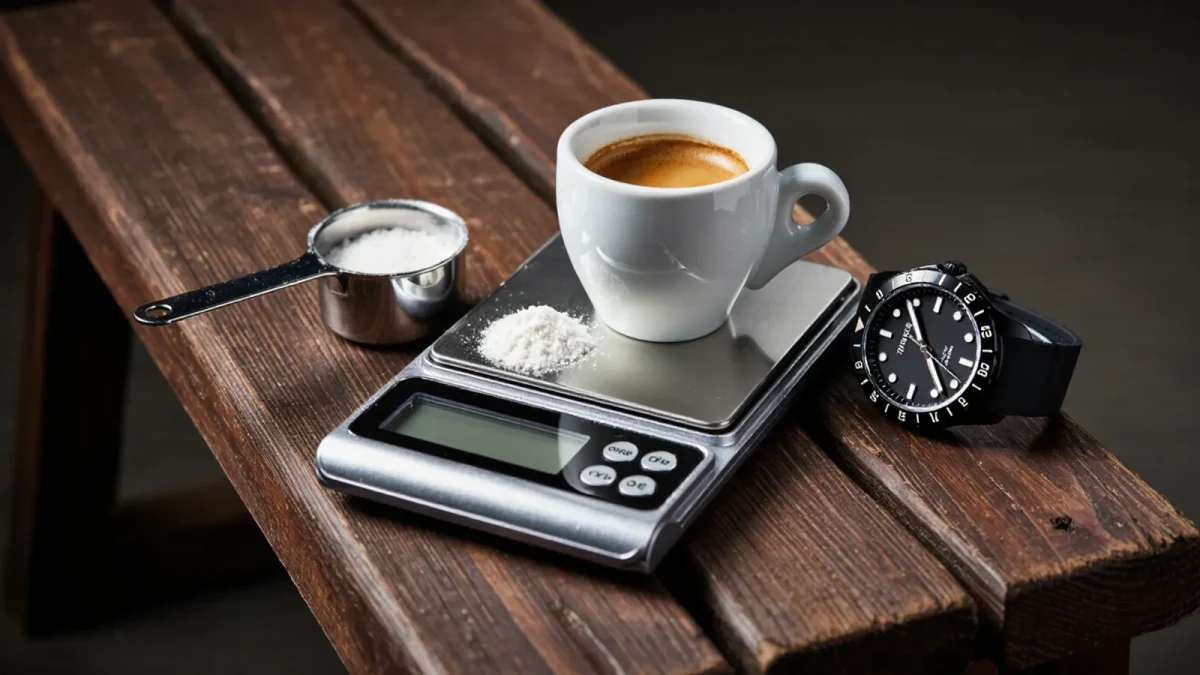
Caffeine is the most consistently performance-enhancing substance legal in sport: meta-analyses, including a 2018 pooled analysis of caffeine and resistance exercise by Jozo Grgic and colleagues, find typical doses of 3 to 6 milligrams per kilogram of body weight improve endurance, power output and repeated-sprint performance by low single-digit percents in most adults. A 70-kilogram athlete lands between roughly 210 and 420 milligrams — one to two strong cups of coffee, or a standard pre-workout serving.
This magazine publishes information, not medical advice; caffeine interacts with heart conditions, anxiety and pregnancy, and personal dosing decisions belong with a qualified professional.
What does caffeine actually improve?
The strongest evidence is endurance. Time-to-exhaustion and time-trial performance both improve reliably in controlled trials, with effects typically around 2 to 3 percent — meaningful at any level of sport. Time trials matter more than time-to-exhaustion designs, and the effect survives both. For strength and power, Grgic's 2018 meta-analysis of resistance-exercise studies found caffeine improved maximal strength and muscular endurance modestly versus placebo across the pooled trials. Team-sport sprint performance, especially repeated sprints late in simulated matches, improves as well.
Fine motor tasks show a subtler pattern: steady hands can get slightly shakier at high doses, a detail archers and shooters have known for decades — caffeine is a banned-level concern only in competition shooting, where urine thresholds apply.
How does it work?
The primary mechanism is adenosine blockade. Adenosine accumulates during waking hours and damps neural activity; caffeine occupies its receptors without activating them, delaying the perception of fatigue and effort. Secondary effects — adrenaline release, increased fat mobilization — contribute less than once believed. Critically, caffeine changes how hard effort feels: athletes move the same loads or sustain the same paces at a lower rating of perceived exertion.
What dose is right?
The dose-response curve flattens early. Benefits appear from about 2 milligrams per kilogram and plateau around 4 to 6; beyond that, jitters, anxiety and elevated heart rate grow faster than performance. Smaller athletes should scale down accordingly, and genetic variation in CYP1A2 — the enzyme that clears caffeine — shifts individual response in both directions.
Timing is straightforward: blood levels peak 30 to 60 minutes after coffee, so the standard advice is consuming caffeine about an hour before the key effort. Caffeine gum absorbs faster through the cheek, peaking in roughly 10 to 20 minutes — useful for a second half or late-session boost.
Does tolerance ruin the effect?
Less than gym lore claims. Regular caffeine users show blunted some subjective effects — the jitters, the alertness jolt — but performance benefits in trials largely persist in habitual consumers, per a 2019 meta-analysis of caffeine habituation by Grgic and colleagues. The practical implication: athletes do not need to abstain for weeks to feel a race-day dose, though some teams still use short tapering protocols with individual testing.
The real cost is elsewhere.
Related stories: Hydration and Electrolytes: What the Evidence Actually Shows · Fat Adaptation and Low-Carb Endurance: What the Science Shows.
What about sleep?
Sleep is where caffeine collects its fee. Caffeine consumed even six hours before bed measurably reduces total sleep time and sleep quality in controlled studies — a finding replicated repeatedly, including a well-known 2013 trial by Christopher Drake and colleagues. For athletes training in the evening, a pre-workout dose at 6 p.m. can still be circulating at midnight. Since sleep itself is a powerful performance input, a caffeine habit that improves the evening session while wrecking the night is borrowing at a bad rate.
A sensible rule used by performance staff: cut caffeine at least eight to ten hours before intended sleep, and reserve high doses for competitions and the hardest sessions rather than every training day.
Coffee, pills or gum?
Coffee works — trials using coffee as the delivery vehicle show real performance effects, though caffeine content of brewed coffee varies enough that precise dosing is easier with tablets, gum or measured powder. Decaf as pre-workout fails the performance test, so the effect is the caffeine, not the ritual. Energy drinks deliver the dose with added sugar that may or may not fit the athlete's plan.
How do different athletes use it strategically?
Endurance athletes dose once, about an hour before the start, and often take a second small dose late in long events — a format supported by trial evidence showing caffeine remains effective when taken during prolonged exercise, even after fatigue has set in. Team-sport athletes tend to pre-load before kickoff and, increasingly, use gum at halftime for the faster absorption through the cheek. Lifters take it before sessions where top sets matter, less often on volume days.
The strategy worth copying from elite practice is restraint: caffeine reserved for the sessions and competitions where the output matters. Daily habitual use for ordinary training works fine, but it leaves no sensitivity headroom, adds nothing to easy sessions and complicates sleep. Treat it like any ergogenic tool — dosed deliberately, timed around sleep, and used less often than it is available.
Athletes competing under anti-doping rules should also remember that caffeine is a monitored substance rather than a banned one at normal doses, though urinary thresholds still exist in a few precision sports.
The bottom line
Three to six milligrams per kilogram, about an hour out, is the evidence-backed dose for most adults; benefits are real but modest — low single digits — and they persist in habitual drinkers. The bill arrives at bedtime, so timing caffeine around sleep is the skill that separates a useful tool from an expensive trade. The research base is catalogued on PubMed.
For more context, read Fat Adaptation and Low-Carb Endurance: What the Science Shows.
For more context, read What the Research Actually Says About Creatine.
For more context, read Supercompensation: How Training Adaptation Actually Works.