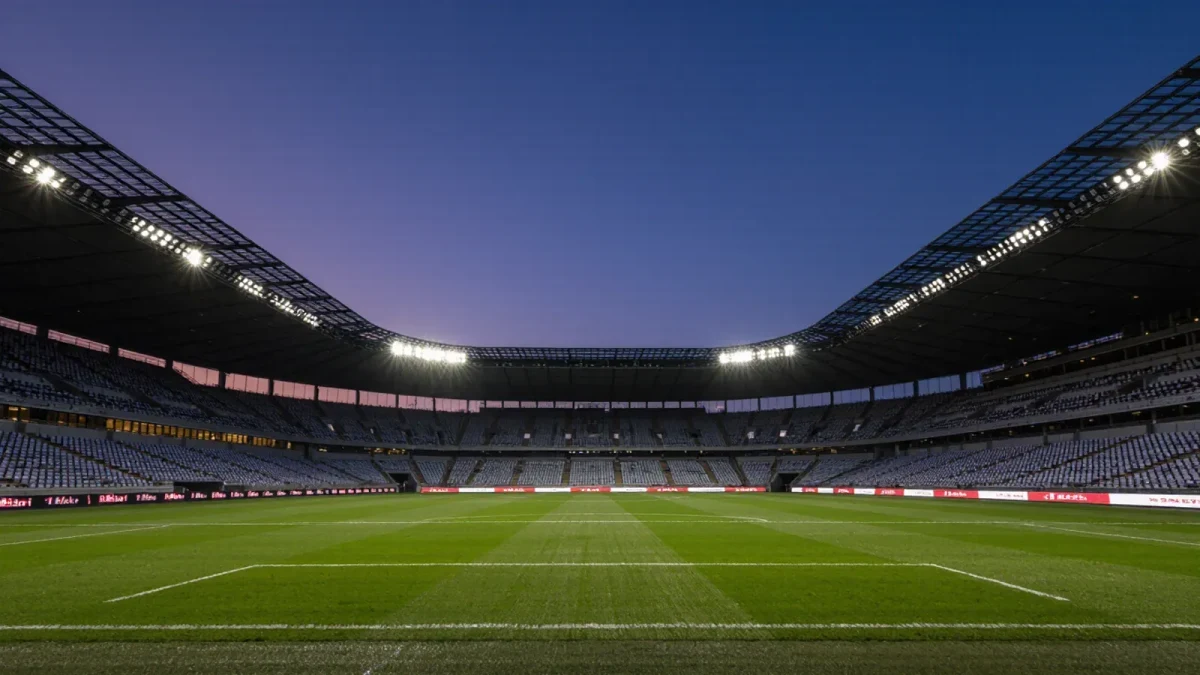
The 2026 FIFA World Cup opened on June 11, 2026, at the Azteca in Mexico City, with co-hosts Mexico beating South Africa in the tournament's first match, per Reuters' match coverage from the stadium. The opener made the venue, now officially named Estadio Ciudad de Mexico, the only stadium in the world to stage three World Cup opening matches, after 1970 and 1986.
This is the first World Cup with 48 teams and the first with three host nations, Canada, Mexico and the United States, a format that expands the group stage to twelve groups of four and stretches the tournament across three countries. South Africa's coach Hugo Broos told Reuters on June 11 that his side was ready to test Mexico despite the home crowd's advantage.
What is new about this World Cup's format?
Twelve four-team groups mean 104 matches instead of the previous 64, with the top two in each group plus the eight best third-placed teams advancing to a new round of 32. For players, the expanded bracket means up to eight matches to reach a final rather than seven, and for national-team staffs it means a longer tournament with deeper squad rotation, more recovery management and more travel.
The geography compounds that load. Group-stage venues span from Vancouver to Mexico City, and the Mexican capital's altitude, about 2,240 meters above sea level, is the variable visiting teams have prepared for most explicitly. National sides scheduled altitude adaptation blocks before the tournament, applying the long-established principle that endurance performance at elevation improves over days to weeks of exposure.
Related stories: Tour de France Opens With Relay Time Trial in Barcelona · Giro d'Italia Opens in Bulgaria as Magnier Takes Stage 1.
What does a summer World Cup mean for player conditioning?
June and July heat across North American venues pushes matches toward evening kickoffs and heavier emphasis on hydration and cooling breaks, the same scheduling calculus applied at recent summer tournaments. Squad-depth data analysts have argued for years that congested tournament calendars raise substitution rates, and the 104-match format is the largest test of that thesis yet.
For training-minded readers, the group stage is a live lesson in load management: three matches in roughly ten days, in three countries' worth of travel, with roster rules allowing five substitutions. The teams that manage minutes in the opening matches are usually the ones still fresh in the knockout rounds.
What happens next?
The tournament continues through the group stage and the new round of 32 into July, with the final scheduled for MetLife Stadium in New Jersey. Mexico's opening win, in front of more than 80,000 spectators, gave the co-hosts the start they wanted, and the expanded field its first result.
As the group stage unfolds, the questions that will decide it are old ones wearing new numbers: who adapted to altitude and heat, who rotated well, and whose bench was deep enough for a 104-match tournament's demands.
For more context, read Tour de France Opens With Relay Time Trial in Barcelona.
For more context, read giro d'italia 2026.
For more context, read Milan Cortina Winter Olympics Open at San Siro.